Pooling resources and knowledge to swim through the process of pool and spa certifications can be overwhelming. In this article, we will equip you with a straightforward guide to navigate this process.
We detail steps, enumerate requirements, and explain the scrutiny your pool and spa facilities will go through to achieve certification. Whether you’re a pool owner, seeking to comply with safety regulations, or a property manager desiring to enhance the value and safety of your premises, this blog post is a reservoir of valuable information.
Let’s plunge into the process and understand the roadmap to achieving pool and spa certifications.
Key Takeaways
- Registering your pool or spa with the local council is an important step to ensure compliance with safety regulations.
- Adhering to pool fencing and barrier requirements, including proper gate installation and maintenance, helps promote a safe swimming environment.
- Understanding and meeting specific requirements for indoor pools/spas and outdoor spas are crucial for safety and compliance.
- The compliance certification process involves initial inspections, self-assessment checklists, and obtaining a swimming pool compliance certificate.
Pool and Spa Inspection Checklist
In this part of our guide, we offer a comprehensive checklist that will simplify the task of preparing for pool and spa inspections. Let’s begin with registering your pool or spa, an important initial step mandated by most legal authorities. Ensure that your property’s pool or spa is registered with the relevant body. Next, we move on to the critical aspect of pool fencing or barrier requirements, ensuring that your facility meets stringent safety regulations.
Our checklist further encapsulates safety gate guidelines, outlining the details for proper installation, weight-bearing capacities, and requisite locking mechanisms. Finally, we delve into the specifics of indoor pool/spa requirements and outdoor spa regulations, addressing unique elements and requirements related to each type of facility so that your property adheres completely to local health and safety standards.
Registering your pool/spa
We’ll guide you through the process of registering your pool or spa, a necessary step for ensuring compliance with safety regulations. Upon completion of a new or existing pool/spa, owners must promptly register it with their local council.
This web-based registration is available on most council websites and typically requires the submission of detailed plans and specifications. If you’ve installed an indoor spa pool, don’t forget to declare this during registration since its requirements differ from those of outdoor pools.

Non-compliance with these directives may lead to hefty fines as per Australian law. Now that we understand why we need to register our pools or spas let’s proceed towards understanding fencing requirements in the next section.
Pool fencing/barrier requirements
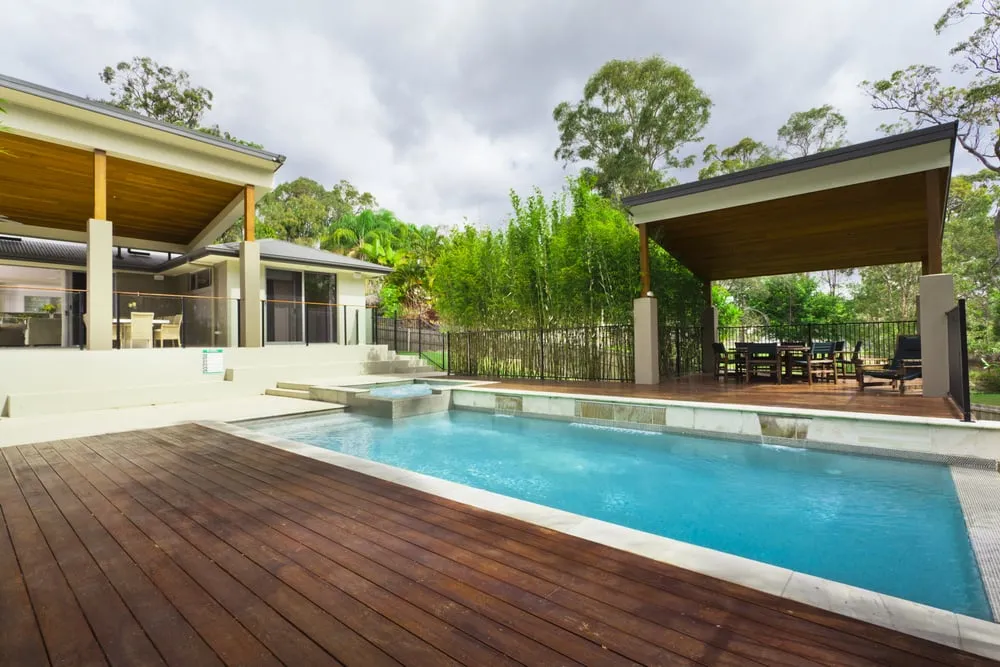
To ensure the safety of pool and spa users, there are specific requirements for pool fencing and barriers that must be followed. In order to comply with regulations, pool owners in Australia need to adhere to these guidelines.
This includes having a fence or barrier around the perimeter of the pool area that meets certain height and design specifications. The gate must also be self-closing and self-latching to prevent unauthorised access.
It’s important for homeowners, building inspectors, engineers, architects, interior design specialists, real estate agents, pest inspectors, and legal office personnel to familiarise themselves with these requirements in order to promote a safe swimming environment.
Safety gate guidelines
Ensuring the safety of your pool or spa doesn’t stop at the fencing requirements. Safety gate guidelines are equally important to prevent accidents and keep everyone protected. Proper installation and maintenance of safety gates is crucial to meet compliance regulations.
Regularly check that all gates are self-closing, self-latching, and open outwards from the pool area. The latches should be positioned high enough so that children cannot reach them, with a minimum height requirement of 1.5 meters for latch release mechanisms above ground level.
Additionally, make sure there are no gaps larger than 10cm between the bottom of the gate and the ground surface to prevent small children from crawling underneath. Keep these safety gate guidelines in mind to ensure a secure pool or spa environment for all users.
Indoor pool/spa requirements
To ensure the safety and compliance of indoor pools and spas, there are specific requirements that need to be met. These include proper ventilation systems to minimise humidity and prevent damage to the surrounding structure.
Additionally, an appropriate drainage system is needed to handle any water leaks or spills. Adequate lighting is also crucial for visibility and avoiding accidents in these enclosed spaces.
Regular maintenance and cleaning of the pool or spa surfaces are essential to maintain hygiene standards. By meeting these requirements, indoor pool and spa owners can create a safe environment for their users while ensuring compliance with regulations.
Outdoor spa regulations

Outdoor spa regulations in Australia are an important aspect of pool and spa safety. Spa owners need to be aware of the specific requirements for outdoor spas to ensure compliance with the law.
This includes adhering to regulations regarding pool fencing, safety gates, and barrier height. Additionally, outdoor spas must meet certain standards for structural integrity and water quality maintenance.
Regular inspections and proper maintenance are crucial to keeping your outdoor spa safe and compliant with the necessary regulations.
Compliance Certification Process
In our guide’s compliance certification segment, we will delve into the procedures necessary for obtaining a swimming pool compliance certificate. This process includes an initial inspection, during which all elements of the pool or spa are examined thoroughly for compliance with set guidelines. Should the initial inspection reveal any issues, follow-up inspections may be required, and we will guide you on how to rectify the flagged issues effectively.
Alongside this, we provide self-assessment checklists that can serve as hands-on tools, helping you to independently evaluate your pool or spa against the established requirements. This diligent pursuit of compliance certification not only ensures that your pool or spa is inherently safe for users but also confirms that your facility adheres to all pertinent regulations in your area.
First inspection and follow-up inspections
During the pool and spa certification process, the first inspection is a crucial step to ensure compliance with safety regulations. A professional inspector will assess various aspects, such as pool fencing/barrier requirements, safety gate guidelines, and indoor/outdoor spa regulations.
Once any necessary changes have been made based on the initial inspection findings, follow-up inspections may be conducted to verify compliance. It is important for pool owners to understand that multiple inspections may be required before obtaining a swimming pool compliance certificate.
These inspections help ensure that pools and spas are safe and secure for use by both residents and visitors alike.
Self-assessment checklists
To ensure that your pool or spa meets compliance requirements, self-assessment checklists are available to help you evaluate the safety and security of your pool. These checklists cover everything from pool fencing and barrier requirements to indoor and outdoor spa regulations.
By using these checklists, you can easily identify any areas that may need improvement in order to obtain a compliance certificate for your pool or spa. Remember to regularly review these checklists to keep up with any changes in regulations and maintain a safe swimming environment for everyone.
Obtaining a swimming pool compliance certificate
To obtain a swimming pool compliance certificate, you need to ensure that your pool meets all the safety and security requirements set by the regulations. This involves conducting a thorough inspection of your pool and its barrier to make sure they meet the necessary standards.
Once your pool has been inspected and deemed compliant, you can apply for a compliance certificate from your local council or relevant authority. This certificate serves as proof that your pool is safe and meets all the necessary guidelines.
By obtaining this certificate, you not only ensure the safety of those using your pool but also comply with legal obligations regarding pool safety in Australia.

Importance of compliance certification
Obtaining a compliance certification for your pool or spa is of utmost importance. This certification signifies that your pool meets all the necessary safety and security requirements, ensuring the well-being of everyone who uses it.
It not only gives you peace of mind but also demonstrates your commitment to ensuring a safe environment for yourself, your family, and any guests who enjoy your pool or spa. By obtaining a compliance certificate, you are showing that you take pool safety seriously and are doing everything within your power to prevent accidents and injuries.
Don’t underestimate the value of compliance certification – it’s an essential step in maintaining a safe and enjoyable swimming experience for everyone.
Additional Requirements and Resources
In this guide, we cover the entire gamut of details pertinent to obtaining pool and spa certifications. An essential part of this comprehensive overview includes the administrative requirements for re-roofing, which spans aspects such as obtaining necessary permits and preparing requisite documentation. Meanwhile, we provide a repository of useful links and resources supplying further information related to pool and spa certifications.
Included within this corpus of resources are frequently answered questions by industry professionals, giving you access to practical insights from experienced individuals. Altogether, these diverse facets of our guide work to equip you with all the additional requirements and resources needed to successfully accomplish your pool and spa certifications.
Useful links and resources
We have compiled a list of useful links and resources to assist you in achieving pool and spa certifications. These resources provide valuable information for homeowners, building inspectors, engineers, architects, interior design specialists, real estate agents, pest inspectors, and legal office personnel.
From guidelines on compliance certification processes to details about pool safety regulations in Australia, these links offer a wealth of knowledge. Additionally, you will find accredited pool and spa training courses as well as expert advice on obtaining certifications.
Accessing these resources will help you navigate the requirements and ensure that your pool or spa meets all necessary standards for safety and compliance.
FAQs related to pool and spa certifications
We understand that pool and spa certifications can be a complex topic, so we’ve compiled some common FAQs to help clarify any doubts you may have.
1. How often do I need to obtain a compliance certificate for my pool or spa?
– Pool and spa owners are required to lodge a certificate of barrier compliance every four years. It’s important to check with your local council for specific dates and regulations regarding compliance.
2. What are the requirements for obtaining a pool safety certificate?
– The checklist includes requirements for submitting a complete set of plans, details, and specifications with the application. This ensures that all necessary information is provided to demonstrate compliance with safety standards.
3. Can I perform my own self-assessment before getting an inspection?
– Yes! We provide self-assessment checklists designed specifically for pool inspections, including spa pools. These checklists will help you determine if your pool meets compliance requirements before scheduling an official inspection.
4. Are professional inspections available in my area?
– Professional pool safety inspections are available in Northern NSW and Sydney areas, offering comprehensive assessments and providing compliance certificates upon meeting the necessary standards.
5. Why is it important to obtain a compliance certificate?
– Obtaining a pool compliance certificate signifies that your swimming area is safe and secure, meeting all the necessary regulations. This certification not only ensures peace of mind but also demonstrates your commitment to maintaining a safe environment for yourself and others.
Call Us!
Achieving pool and spa certifications is crucial for ensuring the safety and compliance of your pool or spa. By following the comprehensive checklist provided in this article, you can assess whether your pool meets all the necessary requirements.
Obtaining a compliance certificate not only helps ensure peace of mind but also demonstrates your commitment to maintaining a safe environment for everyone using your pool or spa.